There is a place on the map where trees bleed red, where cucumbers grow into trees, and where the wind is so fierce for three months of the year that the island effectively closes itself. It lies roughly 380 kilometres off the coast of Yemen, closer to Somalia than to any Gulf city, and it looks — genuinely, unironically — like a concept sketch for another planet. This is Socotra, and it is one of the strangest, most beautiful places left on Earth.
Chapter 01Where on Earth Is Socotra?
Socotra is the largest island in a small archipelago in the north-western Indian Ocean, roughly 240 kilometres east of the Horn of Africa and 380 kilometres south of the Arabian Peninsula. It belongs to Yemen. Its main town, Hadibo, sits on the north coast, and around 50,000 people are spread across the whole island.
What makes Socotra remarkable isn't only where it is — it's how long it has been there alone. The island detached from the Arabian mainland during the Miocene, somewhere between 18 and 34 million years ago, and has been evolving in isolation ever since. The result is an ecosystem that reads like science fiction: roughly a third of its 825 plant species grow nowhere else on the planet, and the same is true of more than 90 percent of its reptiles. UNESCO made it a World Heritage Site in 2008, and biologists sometimes call it the Galápagos of the Indian Ocean.
Isolation, in other words, is Socotra's entire personality. Everything that makes it extraordinary — the trees, the language, the silence — comes from the same source.
Chapter 02A Landscape From Another Planet
Drive inland from the coast and the island changes character every twenty minutes.
The Diksam Plateau is a high limestone shelf covered in dragon's blood trees, their flat, umbrella-shaped canopies casting wide circles of shade across pale rock. Further east, on the road towards Firmihin, the forest thickens into something that looks like a deliberately surreal painting: hundreds of these trees standing on bare plateau, trunks thick as a man's chest, each one crowned with a dense green dome.
Elsewhere the oddities keep coming. The cucumber tree (Dendrosicyos socotranus) is a swollen, bottle-shaped plant that looks like a bonsai baobab. The desert rose (Adenium obesum) pushes pink flowers out of a bulbous grey trunk. And Punica protopunica — the wild pomegranate — is the only ancestor of the fruit we eat today that still grows in the wild, and it grows here and nowhere else.
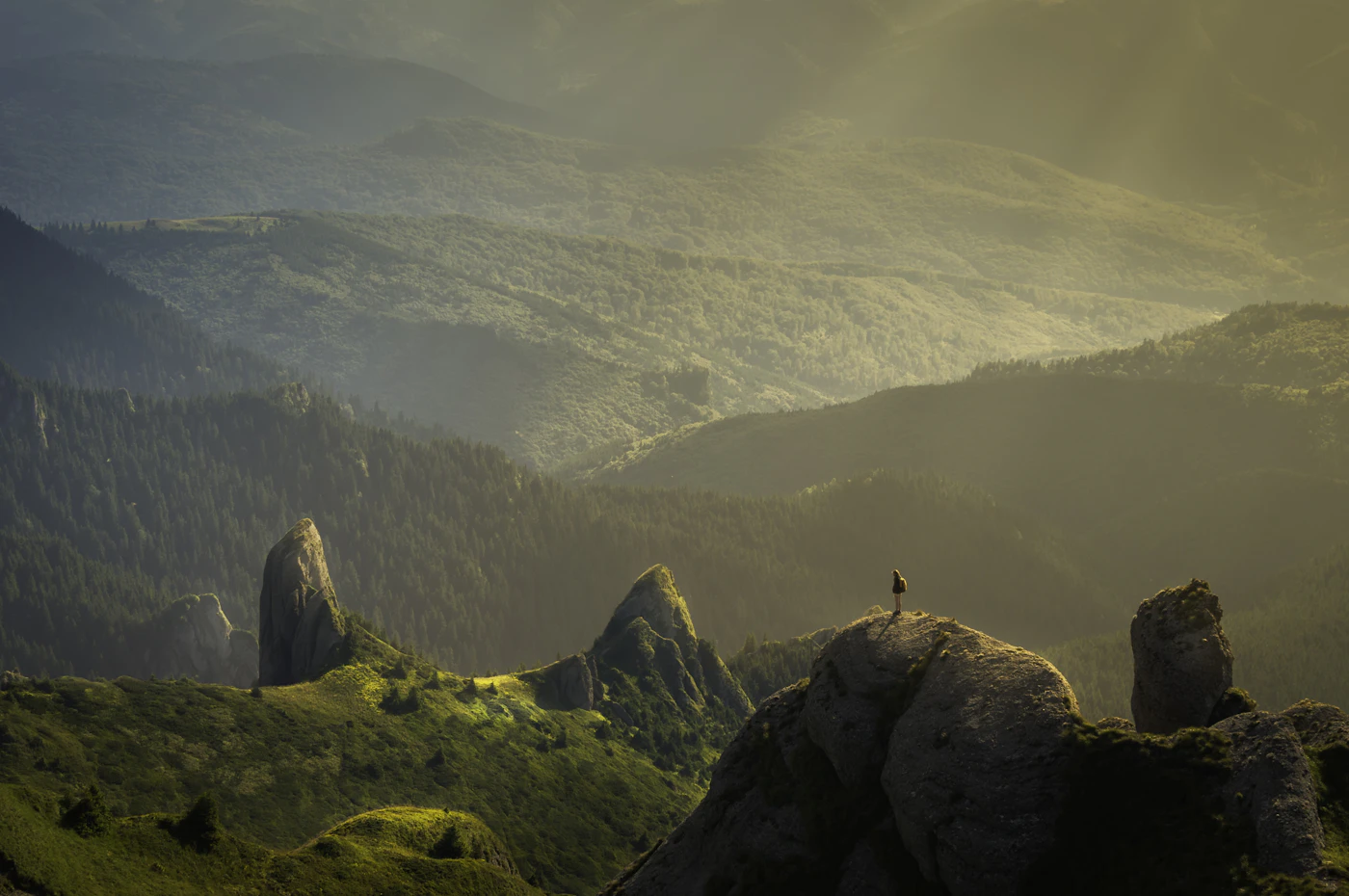
Then there's the coastline. At Detwah Lagoon, near the village of Qalansiyah in the west, a shallow turquoise lagoon meets a white sand spit. At Arher, on the eastern tip, freshwater springs seep out of the dunes and run straight into the sea. Hoq Cave, a limestone cavern more than three kilometres deep, holds inscriptions left by sailors from India, Arabia and beyond — some of them nearly two thousand years old.
And almost none of it has been developed. There are no resorts, no beach clubs, no queues.
Chapter 03The Tree That Bleeds Red
If Socotra has a mascot, it is Dracaena cinnabari — the dragon's blood tree.
The name comes from the resin. Score the bark and the tree weeps a dark red sap that dries into a glossy resin, traded for millennia as a medicine, a dye, a varnish and a cosmetic. In medieval Europe it was ground into pigment for violin varnish; in traditional medicine it was used on wounds and gums. Local legend says the first dragon's blood tree grew from the blood of a dragon killed in a fight with an elephant — a story that explains both the colour and the tree's strange, ancient appearance.
The umbrella canopy isn't decoration. It's engineering. Socotra's rainfall is sparse and arrives largely as fog and mist blown in from the sea; the dense crown funnels that moisture down the trunk and into the shallow soil around the roots, and shades the ground so that less water evaporates.
But the species is in trouble. Goats eat the seedlings before they can establish, and the island appears to be drying. In many groves there are old trees and almost no young ones — a forest that is, quietly, not replacing itself. Conservation teams have started building fenced nurseries and planting seedlings in protected plots. It is slow work, measured in decades.
You will often see dragon's blood resin for sale in Hadibo and in the villages. Buying it directly from local families is one of the most direct ways your money stays on the island — but never harvest it yourself, and never carve into a living tree.
Socotra is not a theme park with a gift shop. It is a working island with a small population, a fragile ecosystem and a language that has never had a wide readership.
Chapter 04A People and a Language Apart
Around 50,000 people live on Socotra, and most of them speak Soqotri — a Modern South Arabian language with no close relative among the major languages of the region. It is closer in structure to ancient Semitic tongues than to Arabic, and it stayed largely unwritten for most of its history, carried instead through an extraordinary tradition of oral poetry.
That linguistic isolation tells you something about the island's history. Socotra sat on an ancient trade route between Arabia, Africa and India, but the interior stayed remote. Sailors stopped for water and dragon's blood; almost nobody colonised the plateau. The culture that emerged is a blend of Arab, African, Indian and even Portuguese influences, filtered through centuries of going its own way.
You will hear Arabic in Hadibo and English in the tour camps. But if you're lucky — and if you're patient — someone will recite Soqotri poetry to you. You won't understand a word of it, and it will still be worth the trip.
Chapter 05The Monsoon That Shuts the Island Down
Between roughly June and September, the south-west monsoon arrives. Locals call it the khareef, and it is not a drizzle. Winds of 40 to 50 knots rake the island, the sea turns impassable, and for centuries Socotra was simply cut off from the outside world for a third of every year. Families moved inland to higher ground. Boats stayed beached. The island waited.
Modern aviation has softened that isolation, but not removed it. Flights are frequently disrupted during the monsoon, and travel in that window is genuinely difficult. The upside of that annual shutdown is that the island never became a mass-market destination — the weather enforced a limit that no government ever had to.
Chapter 06Getting There: Flights, Visas, Realities
This is the part where you need to be careful.
Socotra's airport (SCT) sits near Hadibo. There are no ordinary scheduled international services: most travellers arrive on organised charter flights, historically from Cairo, with occasional services from Gulf hubs depending on the season and the political situation. Visa arrangements are normally handled by the tour operator as part of the package — you generally cannot simply buy a ticket and show up.
You should also be honest with yourself about the security picture. Yemen has been in conflict for a decade, and Socotra's situation is distinct from the mainland's but not entirely separate from it. Several Western governments advise against all travel to Yemen, including the island. That doesn't automatically make a trip impossible — but it does mean you should read your own foreign ministry's current advisory, buy specialist insurance that explicitly covers Yemen and includes medical evacuation, and travel with a licensed operator who has local staff on the ground.
There are no ATMs worth relying on. Bring cash — and bring more than you think you need. Mobile coverage is patchy outside Hadibo, and card payments are effectively unavailable outside a handful of places. Check your government's travel advisory on the day you book, not the day you read this article.
Chapter 07How to Travel Socotra Responsibly
Socotra's tourism is small and locally run, and it works best when visitors treat it that way.
- Travel with a Socotri operator. Local guides don't just translate — they know which groves are regenerating and which families are hosting visitors this week.
- Bring cash in small notes. You will need it for guides, homestays, honey, frankincense and petrol.
- Carry your rubbish out. The island has no waste system capable of absorbing tourist plastic. Take it back to Hadibo, or home.
- Don't climb the dragon's blood trees. The bark scars, and the resin is the tree's life support.
- Ask before you photograph people. Especially women. A short conversation goes a long way; a lens in someone's face does not.
- Spend where it stays. Homestays, local honey, local guides, families who cook for you.
- Respect the water. Fresh water is scarce; long showers are a luxury the island cannot afford.
Camping is the norm, accommodation is simple, and the roads are rough. That's the deal. In exchange you get an island with no crowds, no traffic, and a night sky that will ruin every other night sky for you.
Chapter 08When to Go, and What You'll Remember
The window is roughly October to April. December to February is cooler and comfortable for hiking. April and May are hotter, but the dragon's blood trees flower and the plateau turns briefly, improbably green. Avoid the monsoon.

What stays with people afterwards isn't the photographs, though the photographs are extraordinary. It's the quiet. Standing on the Diksam Plateau at dusk, with the wind dropping and a hundred umbrella-shaped trees silhouetted against the sky, you get the strange sense of being somewhere the world forgot to update.
Socotra isn't a bucket-list checkbox. It's a reminder that the planet still has places that haven't been explained to death. Go gently. Leave it that way.
QuestionsFrequently Asked Questions
A final word. Socotra is one of the last places where travelling still feels like an act of curiosity rather than consumption. It is also fragile, expensive to reach and logistically awkward. If you go, go slowly — and let the island set the pace.
— The Book and Fly team